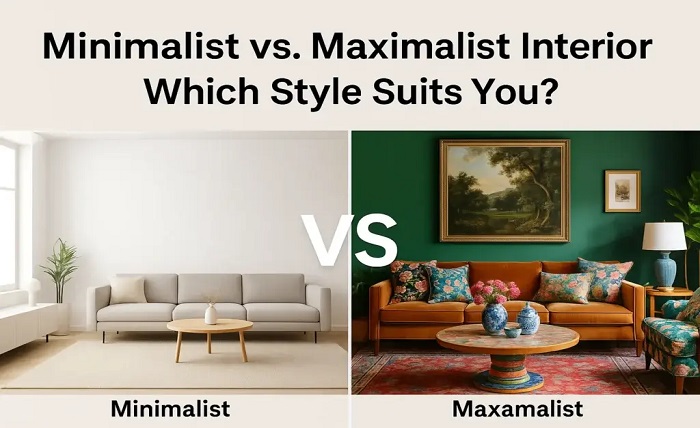
The debate between minimalism and maximalism is often framed as a matter of taste: clean lines versus layered textures, empty surfaces versus crowded shelves. But behind the visual difference lies a deeper question: which style is actually more comfortable to live in, day after day? Comfort isn’t just about a soft sofa or warm lighting; it’s about how a space supports your routines, calms or energizes your mind, and fits your lifestyle. Even the rise of digital habits, from browsing interior inspiration to casually visiting lightning roulette app download on a betting site, subtly affects how we think about risk, reward, and the spaces where we unwind.
When you strip the conversation down to essentials, minimalism and maximalism each promise a kind of comfort: minimalism offers clarity and order, while maximalism offers warmth and expression. Whether one feels more livable than the other depends on personality, daily rhythms, and how tolerant you are of visual stimulation.
The Psychological Comfort of “Less”
Minimalism is often associated with calm, airy rooms, pale colors, and a noticeable lack of clutter. Psychologically, this can be restful. A pared-back room gives the eye fewer things to process, which for many people translates into a quieter mind. After a long day, walking into a space where everything has a place and there are wide, open surfaces can feel like a small exhale.
Minimalism can also reduce decision fatigue. With fewer objects around, there are fewer things to maintain, arrange, and worry about. You are not constantly choosing which ornament to dust or which stack of magazines to move. This can be especially comforting for people with busy schedules or mentally demanding jobs; the home becomes a neutral, steady backdrop instead of another source of stimulation.
On the other hand, extreme minimalism can feel sterile, even lonely. If the pursuit of “less” becomes rigid—no family photos, no visible books, no quirky souvenirs—the space may stop feeling like it belongs to a real person. The line between calming and clinical is thin. For some, a very spare environment can actually increase anxiety, because there are fewer comforting cues of life, history, and personality.
The Emotional Warmth of “More”
Maximalism steps in where minimalism steps back. It revels in pattern, color, and layers of objects: shelves full of books, walls covered in art, richly textured fabrics, and distinctive, sometimes eccentric pieces. For many people, this is emotionally reassuring. Surrounded by beloved possessions, they feel rooted and safe.
From a comfort perspective, maximalism excels at storytelling. Every object can carry a memory: a gift from a friend, a souvenir from a trip, a handmade bowl, a worn but cherished armchair. The home becomes a physical biography. This can make a space feel deeply welcoming, especially to its inhabitants. A maximalist living room might feel like a warm conversation, where your eyes roam from detail to detail and always find something interesting.
Yet there is a trade-off. A heavily layered space can easily tip into sensory overload. Too many competing colors or shapes make the room feel smaller or more chaotic. For people sensitive to visual noise, a maximalist environment may be tiring, especially if there is little organization behind the abundance. Comfort in maximalism depends a lot on curation: more is more, but it still needs some structure.
Maintenance, Cleaning, and Everyday Life
Comfort is not only about how a room looks but how easy it is to take care of. Here, minimalism usually gets the practical advantage. Fewer objects mean fewer things to clean around. Surfaces are easier to wipe, floors are simpler to vacuum, and there are fewer items to misplace. This practical simplicity can reduce low-level stress and free up time.
Maximalism demands more maintenance. Dust settles on decorative objects, books, frames, and textiles. Rearranging furniture or cleaning thoroughly becomes a more complex task. If life gets busy, a maximalist space can quickly look messy rather than artfully layered. The same objects that once felt charming may begin to feel like a burden.
However, maintenance is also about attitude. Someone who loves their collections may genuinely enjoy dusting shelves and reorganizing displays, treating it as a pleasant ritual rather than a chore. In that case, the work itself supports comfort because it reinforces a sense of care and connection to the home.
Personal Boundaries and Social Comfort
Another aspect of comfort is how you feel when other people enter your space. Minimalist homes often feel presentable with less effort. Because there is less stuff, there is less that can be out of place. Guests may perceive the environment as sophisticated, spacious, and restful. For hosts who feel self-conscious about clutter, minimalism can be a protective shield.
Maximalist homes, in contrast, can be wonderfully inviting for social gatherings. There are more seats, more cushions, more side tables for drinks, more conversation pieces on the walls and shelves. Guests may feel they are stepping into a lively, generous environment. But maximalism also reveals more of you—your tastes, hobbies, and oddities. If you value privacy or feel anxious about being “seen,” this openness may be less comfortable.
Hybrid Approaches: Comfort in the Middle
Most people do not live in perfectly minimalist or perfectly maximalist spaces. Real homes often fall somewhere in between: clean lines with a few vivid collections, or layered rooms with pockets of visual calm. From a comfort perspective, this hybrid approach has real advantages.
A home can be functionally minimalist in high-activity areas—like the kitchen, hallway, or workspace—while being more maximalist in areas meant for relaxation or creativity, such as the living room or a hobby corner. This allows clear zones: spaces for focus and spaces for expression. The overall environment becomes more adaptable to changing moods and needs.
You can also think of “minimalist structure, maximalist soul”: neutral, coherent base layers (floors, walls, large furniture) combined with expressive art, textiles, and small objects that are easy to change or move. This keeps maintenance manageable while still allowing personality to shine through.
So, Which Style Is More Comfortable?
There is no universal answer, because comfort is partly psychological and deeply personal. However, some general tendencies emerge:
- If you are easily overstimulated, dislike tidying, or crave mental clarity after work, a more minimalist environment—softened with a few meaningful objects—will often feel more comfortable.
- If you draw energy from color, memories, and collections, and you don’t mind or even enjoy the care that objects require, a thoughtfully curated maximalist home may feel more supportive and emotionally rich.
- If your life stage or habits change over time, your comfort level with each style may shift as well. A busy household with children might lean toward practical minimalism, while an empty-nest phase might invite more playful maximalism.
In the end, the most comfortable interior is not the one that best matches a design label, but the one that respects your habits, temperament, and capacity for care. Minimalism and maximalism are not strict rules; they are tools. You can borrow what you need from each—clarity from minimalism, warmth from maximalism—to design a home that feels genuinely livable for you, not just photogenic for someone else.