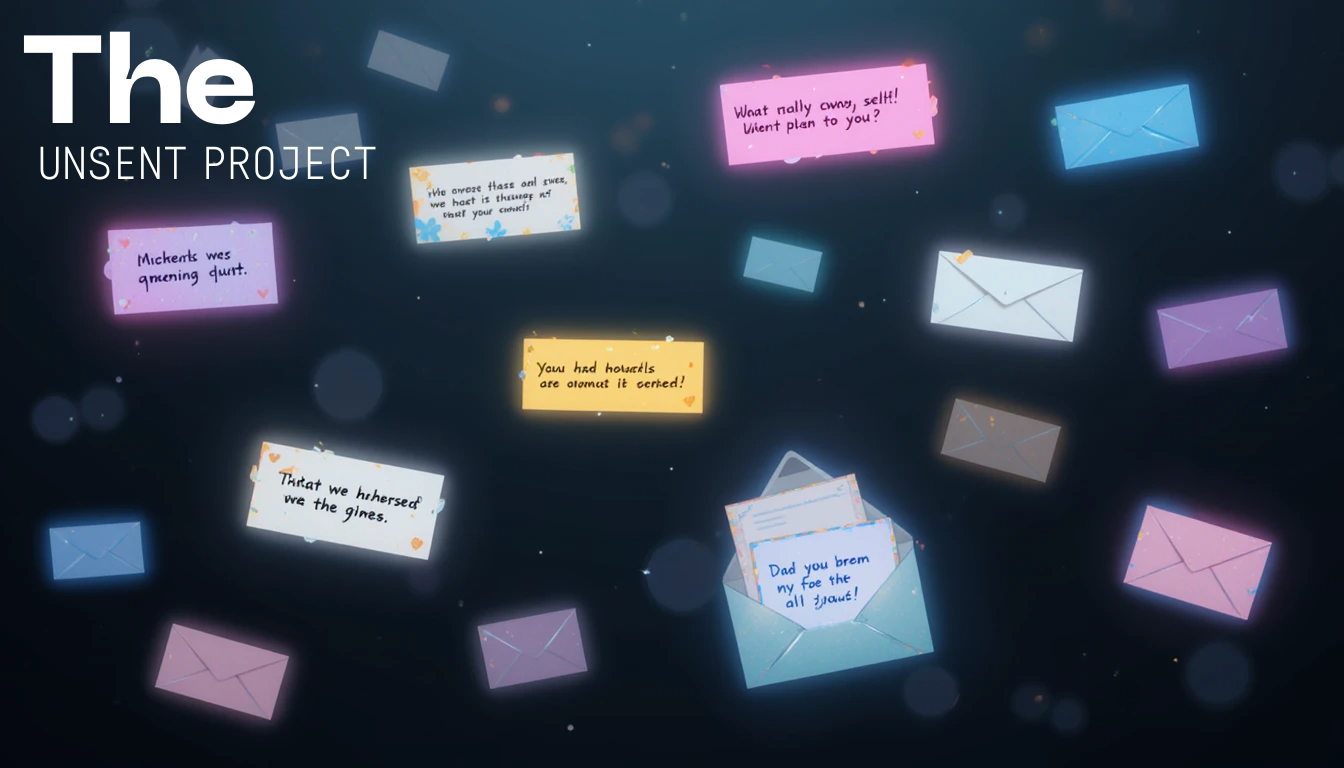
In the vast landscape of digital storytelling and emotional expression, few projects have captured the raw authenticity of human experience quite like the unsent project. This new digital archive has turned into a refuge of millions of individuals all over the globe who bear the burden of words that have never been spoken, messages that have not been sent, and feelings that have not been expressed. Through its simple yet profound concept, the unsent project has transformed into a global phenomenon that speaks to the universal human experience of regret, longing, and unexpressed emotion.
Understanding The Unsent Project: A Revolutionary Approach to Digital Healing
The unsent project emerged from the recognition that everyone has messages they wish they could send but never do. Be they a message to an old lover, a note to a dead parent or a message of forgiveness to a lost friend, these are unsent messages that are some of our most intimate and vulnerable thoughts. The site offers a special place where people can post their unsent messages anonymously and form a tapestry of human emotion that is felt across cultures and geographical borders.
At its core, the unsent message project operates on a beautifully simple premise: participants submit their unsent messages along with the first name of the intended recipient and assign a color to represent their emotional state or relationship. Such submissions are then put together in a visually beautiful archive that enables viewers to navigate through thousands of unsent messages, each of which is a moment of human vulnerability and connection.
The power of the unsent project lies not just in its content, but in its ability to make participants feel less alone in their experiences. By posting their un-sent message of a lost love called Sarah, the person will become a part of a community of thousands of others who have gone through the same heartbreak and thus, an invisible community of shared experience and understanding is formed.
The Psychology of Unsent Messages
The unsent messages phenomenon is related to the basic features of human psychology and communication. It is not a new fact to psychologists that the process of writing, even when the writing is not shared, can be therapeutic. The unsent messages project leverages this understanding, providing a platform where people can process their emotions through written expression without the fear of judgment or unwanted consequences.
Studies on expressive writing therapy have revealed that expressing thoughts and emotions in words can aid people to deal with trauma, stress, and get clarity on complicated emotional issues. The unsent project takes this concept and scales it to a global level, creating a massive repository of human emotional expression that serves both individual and collective healing purposes.
The psychology of unsent messages also shows significant information about the human relationships and communication patterns. Many submissions to the unsent project represent missed opportunities for closure, unexpressed gratitude, or words of love that fear prevented from being shared. As we study these patterns we can learn a lot about the obstacles that inhibit authentic communication and the emotional price of these communication breakdowns.
The color-coding system used in the unsent project adds another layer of psychological insight. Colors have always been linked to emotions and psychological conditions and the color used in the project enables a further level of emotional expression. Red may symbolize passion or anger, blue may symbolize sadness or calm and yellow may symbolize happiness or hope. This visual component makes the archive not only a set of words, but a colorful emotional world.
The Impact and Reach of The Unsent Project
Since its inception, the unsent project has garnered international attention and participation, with submissions coming from every continent and representing dozens of languages and cultures. The international scope of the project proves that the feeling of unsent messages is indeed universal, regardless of cultural, linguistic, and socioeconomic differences.
The unsent messages project has been featured in major media outlets, academic studies, and art exhibitions, establishing its significance beyond just a digital curiosity. The project has been used in university courses in digital humanities, psychology, and communication studies, which have found the project valuable as a cultural object and as a means to learn about human emotional expression.
Social media has played a crucial role in amplifying the reach of the unsent project. The participants tend to share their experience of sending messages or finding especially touching submissions, which become viral and expose new audiences to the project. The hashtag culture about the project has given rise to more groups of individuals who unite on the basis of common experience of unsent messages and unspoken feelings.
The therapeutic impact of the unsent project extends beyond individual participants. Mental health professionals have observed the usefulness of the project as an aid in making clients aware that their feelings of regret, loss, and unspoken emotion is shared by many other people. This normalization may be especially effective when it comes to people who feel isolated or ashamed of their emotional experiences.
Analyzing Common Themes in The Unsent Messages Project
An in-depth analysis of the submissions shows interesting trends and themes that address common human experiences. The archive is dominated by love and loss, as there are endless messages to ex-romantic partners, dead family members and friends who have fallen out of touch. Such messages tend to be regretful, nostalgic, forgiveness or gratitude that was not conveyed in the relationship.
The unsent project also reveals important insights about grief and loss. A large number of submissions are addressed to the dead people and this is a human desire to keep communicating even after death. Such messages tend to convey unfulfilled business, unfulfilled love or forgiveness that came too late. The project turns into a kind of digital cemetery where individuals can deposit their emotional gifts to the people who can no longer accept them in the traditional forms.
Another significant theme within the unsent messages project involves self-reflection and personal growth. Most of the submissions are basically letters to the past self, forgiveness of past errors, recognition of maturity, or remorse of the opportunities lost. These are self-directed messages that emphasize the role of the project in helping people heal and accept themselves.
Submissions also include professional and educational contexts. Messages to past teachers, bosses, colleagues or mentors are usually messages of gratitude that have never been expressed or messages of conflict in the workplace that have never been addressed. These entries point to the emotional depth of professional relationships and how workplace interactions can have a long-term effect on people.
The Artistic and Cultural Significance of The Unsent Project
Beyond its therapeutic and psychological value, the unsent project has established itself as a significant work of digital art and cultural documentation. The aesthetic effect of thousands of messages displayed in color-coded and constantly growing archive is very impressive and addresses the modern digital culture and human connectedness.
The cultural value of the project has been acknowledged by art galleries and museums which have included the project in exhibitions on digital art, human emotion, and contemporary communication. The project is a kind of collaborative art, but of a unique type, in which thousands of anonymous participants contribute to a single work, which no person could create on his or her own.
The unsent project also serves as an important cultural artifact that documents contemporary communication patterns and emotional expression. The archive will probably be used by future historians and sociologists to learn how individuals in the early 21st century experienced and managed emotion, loss, and relationships in a more digital world.
The project also explores the conventional understanding of privacy and public expression, and it develops an environment in which highly intimate ideas can be expressed in a completely anonymous manner to a worldwide audience. This tension between privacy and publicity is indicative of wider tensions in digital culture, in which personal information is more widely shared online and people are attempting to guard their privacy and emotional vulnerability at the same time.
The Technology and Methodology Behind The Unsent Messages Project
The technical implementation of the unsent project is elegantly simple, which contributes to its accessibility and widespread adoption. The submission process is simple, only the unsent message, the first name of the intended recipient and a color choice are needed. This low entry barrier makes the participation of people of all technological backgrounds possible.
The database structure of the project enables the powerful analysis and visualization of the overall submissions. Patterns in color selection, recipient names, length of messages, and themes of messages can be studied to learn about how humans express their emotions and how they communicate. This information can be used in a variety of disciplines such as psychology and sociology, marketing, and user experience design.
The anonymity built into the unsent messages project is crucial to its success. Participants are able to express highly intimate thoughts without the fear of being identified or judged, thus an honesty and vulnerability is achieved that would be unattainable in identified communication. The technical systems behind this anonymity should be reliable and strong to ensure that the participants are confident.
The scalability of the project proves the strength of easy-to-use and properly designed online platforms. With submissions in the hundreds of thousands or millions, the system remains workable and still has the emotional appeal and accessibility that makes the project meaningful to those who participate in it and those who visit it.
International views and cultural differences
While the unsent project reveals universal themes of human emotion and communication, it also highlights interesting cultural variations in how people express and process unexpressed feelings. The works of various cultural backgrounds tend to display different values about directness in communication, family relations, love, and mourning.
In some cultures where direct emotional expression is less common, the unsent messages project provides a particularly valuable outlet for feelings that might otherwise remain completely unexpressed. The anonymity of the site permits members of these cultures to express their emotions which may not be possible in real life.
The international scope of the project has also shown some interesting language trends with a lot of participants opting to send messages in their own languages instead of English. This language variety enriches the archive and proves that the necessity to convey unsent messages is not limited by the language.
Religious and spiritual motifs are common in materials sent by people in different cultural settings, and a great number of messages are addressed to dead family members, spiritual beings, or the thankfulness to divine help or advice. Such submissions point to the project as a digital place of spiritual and religious expression.
The Future of The Unsent Project and Digital Emotional Expression
As the unsent project continues to grow and evolve, it raises important questions about the future of digital emotional expression and online communities. The success of the project indicates that there is a definite human desire to have a platform that allows processing and connection of emotions, which implies that such projects may appear in other areas.
The possibilities of artificial intelligence and machine learning to study the huge amount of submissions offer opportunities and ethical questions. Although AI analysis might provide significant information about human emotional dynamics and communication requirements, it also begs the question of privacy, consent, and commercialization of the most intimate expression.
The unsent project has also inspired similar initiatives focused on specific demographics, relationships, or types of communication. Such variations indicate that the simple idea can be applied to a wide range of applications and may be used therapeutically, educationally or artistically in many settings.
The long-term preservation and accessibility of the unsent messages project archive presents both technical and ethical challenges. Being a digital cultural artifact of great importance, the project needs to be sustainably funded, technically maintained, and governed to make it available to future generations.
Frequently Asked Questions
What is The Unsent Project and how does it work?
The unsent project is a digital archive where people can anonymously submit messages they wrote but never sent to someone important in their lives. The participants just need to give their unsent message, first name of the person they want to send the message to and select a color that reflects their feelings or relationship. These submissions are then put into an online searchable collection that other people can read and identify with these very personal, un-delivered communications. The project provides a secure environment in which individuals can express their unspoken ideas, as well as add to a world-wide weaving of human feeling and experience.
Is my submission to The Unsent Messages Project completely anonymous?
Yes, the unsent messages project maintains complete anonymity for all participants. Personal identifying information is not collected or stored with submissions. The archive contains only the content of the message, first name of the recipient, and the selected color. The platform will enable the privacy of participants and at the same time enable genuine emotional expression. This anonymity is very essential to the success of the project as it allows people to express very personal thoughts without the fear of being identified, judged, or facing any other undesirable results by the intended recipients or any other people in their lives.
Can I search for specific names or messages in The Unsent Project?
The unsent project archive is designed to be browsable and searchable, allowing visitors to explore messages by recipient name or color. It is possible to search by first names to find messages sent to people with that name, but not to find out who sent any particular message. The search option assists individuals to locate messages that they can relate to or identify submissions concerning their own name. Reading messages that are addressed to a person with the same name, many visitors feel comfort, and these unexpected contacts and moments of recognition appear among the anonymous messages.
What types of messages do people typically submit to The Unsent Messages Project?
The unsent messages project receives an incredibly diverse range of submissions reflecting the full spectrum of human relationships and emotions. Typical themes are messages to past lovers about love, apologies, or closure; messages to dead relatives about life updates or unresolved feelings; messages to past friends about disagreements or gratitude; messages to parents, children, or siblings about bad family relationships; and messages to teachers, mentors, or co-workers about their influence. The project also has messages to the past self, which touches on personal development, forgiveness, and introspection.
Why do people participate in The Unsent Project instead of actually sending their messages?
People choose the unsent project over direct communication for many reasons. There are messages that are directed to the deceased and so the conventional delivery is not possible. Others include relationships in which face-to-face contact would be wrong, damaging, or undesired, including with abusive ex-partners or alienated relatives. Most users are able to work out their feelings without being dramatic or reopening old wounds. The project is also a safe environment where individuals can express emotions they are not yet ready to express directly, process difficult emotions, or just get thoughts off their chest that have been bothering them without necessarily needing or expecting a response on the part of the intended recipient.
How has The Unsent Project impacted people’s emotional healing and well-being?
The unsent project has become a powerful tool for emotional healing and processing. Several participants say they feel relieved and cathartic after sending their messages and that the experience is liberating. Reading other submissions makes people feel less isolated in their experiences of loss, regret and unexpressed emotion. Mental health experts have observed the therapeutic aspect of the project, which normalizes the hard feelings and gives a positive outlet to deal with them. The project shows that writing about emotional experiences, even when they are not shared directly with intended recipients, can help to heal and give a feeling of completion or peace.
Can I submit multiple messages to The Unsent Messages Project?
Yes, participants can submit as many messages as they wish to the unsent messages project. Sending messages to various recipients or numerous messages to the same recipient at different times is important to many people because their feelings may change. Other participants take the platform as a continuous emotional release and post new messages as they work through various experiences or relationships. The number of submissions, length of messages and frequency of participation are not limited. This adaptability enables the project to be used as a long-term tool of emotional expression and healing instead of a single event.
What is the significance of the color-coding system in The Unsent Project?
The color-coding system in the unsent project adds a visual and emotional dimension to the archive that enhances both individual expression and collective understanding. The participants select colors to reflect their mood, the type of relationship they have with the recipient, or how they feel about the content of the message. This forms a visual map of emotions throughout the archive, where various colors are used to depict various types of love, loss, anger, gratitude, or hope. The color system also enables the visitor to browse messages by the emotional tone, so that they can find submissions that resonate with their current mood or that give them the kind of emotional connection they want.
How can educators and researchers use The Unsent Messages Project?
The unsent messages project has significant educational and research value across multiple disciplines. The archive is used by educators to educate on the topics of digital humanities, modern communication patterns, and the expression of emotions in literature and psychology classes. The submissions are studied by researchers to learn about trends in human emotion, relationship dynamics, and cultural differences in communication styles. The project is a rare data set to study the way individuals go through grieving, show love, manage conflict, and negotiate complicated relationships. The project has been integrated into the academic curriculum of digital culture, mental health, and social communication patterns.
What makes The Unsent Project different from other platforms for emotional expression?
The unsent project is unique in its focus specifically on unsent communications rather than general emotional expression or social sharing. In contrast to social media sites or therapeutic applications, the project focuses on the particular experience of having something to say and being unwilling or unable to say it directly. Anonymity, simplicity, and sharing in groups form an unusual atmosphere that combines privacy with a sense of community. The artistic, non-commercial character of the project also distinguishes it in contrast to the platforms aimed at profit or a particular therapeutic effect. It is a special contribution to digital emotional expression and human documentation because it is both an individual tool of healing and a communal cultural artifact.
Conclusion
The unsent project stands as a testament to the power of simple ideas to create profound impact. The project has given people a platform to post their unsent messages anonymously, which has formed a global community of people who have experienced the same thing of not expressing their emotion. The archive is both a therapeutic intervention, a work of art, a cultural object and a research material, and it shows the many-faceted worth of platforms that enable genuine human expression.
The universal appeal of the unsent project reveals fundamental truths about human communication and emotional processing. We all have unsent messages, unspoken feelings and words we wish we had said or words we wish we could have back. The project normalizes these experiences and offers a positive avenue through which they can be processed, which helps in personal healing, as well as societal insight.
As digital communication continues to evolve and shape human relationships, the unsent project reminds us of the importance of authentic emotional expression and the therapeutic value of sharing our deepest thoughts, even when traditional recipients are no longer available. The fact that the project continues to expand and make a difference indicates that it will be a useful tool in emotional healing and human connection in the more digital world we live in.
Through its elegant simplicity and profound emotional resonance, the unsent project has created something truly unique in the digital landscape: a space where anonymity enables authenticity, where personal vulnerability creates collective healing, and where unsent messages find their perfect destination in the shared human experience of love, loss, and hope.